




Table of Contents
In the rapidly evolving global medical device market, the demand for precision vascular access tools is at an all-time high. For medical distributors, hospital procurement managers, and specialized clinics, the challenge is no longer just finding a vein finder—it is finding a device that truly works on “difficult” patients.
As market expectations shift towards higher precision and reliability, basic infrared lights are being replaced by intelligent imaging systems. This guide explores what defines a top handheld vein finder in 2024 and why AI-driven technology is the key differentiator for competitive sourcing.
The Core Metric: Image Clarity and Noise Reduction
The most common complaint from nurses using standard vein finders is “visual noise.” Many devices on the market produce images filled with flocculent or striped noise, which can be misleading. A blurry projection can cause medical staff to mistake noise for capillaries, leading to failed puncture attempts.
The solution lies in advanced algorithms. Leading manufacturers, such as Qualmedi, have introduced AI Neural 3D Pseudo-color Algorithms. Unlike traditional processing, this technology filters out noise to present a clean, continuous map of the vasculature.
- Layering Sense: High-quality devices create a strong visual separation between the vein and the surrounding tissue.
- No Interruption: The algorithm ensures that vessel projection is continuous, eliminating the “broken line” effect seen in inferior models.
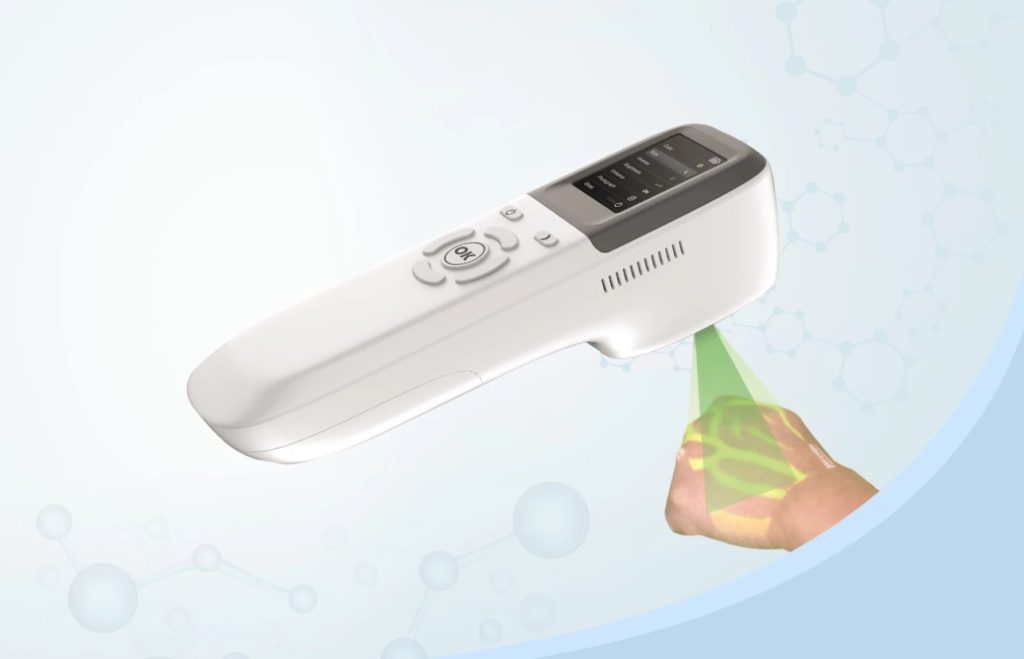
For distributors, offering a device that provides a noise-free experience is the fastest way to build trust with clinical end-users.
Tackling Clinical Hurdles: Hair Interference and Depth
Beyond clarity, functional adaptability is what separates a standard tool from a professional medical instrument. Two specific features are currently driving demand in the B2B sector:
1. Anti-Hair Interference (Depilate Mode)
In many clinical scenarios, particularly with male patients, arm hair can severely disrupt the infrared recognition of veins, creating a “web” of shadows. The Qualmedi QV-600 addresses this with a pioneering Anti-hair Interference Mode (Depilate). This function digitally “removes” hair artifacts from the projection, allowing the veins to stand out clearly. This feature alone significantly expands the applicable patient demographic, a key selling point for hospitals.
2. Visualizing Vein Depth
Locating a vein is step one; knowing its depth is step two. Advanced units now feature a Mixture Colors Mode. By using specific color combinations, the device can visually indicate the depth of the blood vessels. This “3D-like” feedback empowers nurses to choose the most suitable vein for catheterization, reducing the risk of blowing the vein.
Performance Stability: Real-Time Imaging & Battery Life
In an ICU or emergency operating room, a millisecond of lag can result in an error. “Real-time” performance is a critical specification. Buyers should look for devices that project the vein map synchronously with the movement of the hand. The QV-600 is engineered for high-speed processing, ensuring that the projection aligns perfectly with the patient’s anatomy, even during movement.
Furthermore, professional utility demands robust hardware.
- Battery Capacity: Look for devices exceeding standard limits. A 4900mAh lithium battery (providing ~3.5 hours of continuous work) ensures the device lasts through long shifts without needing a recharge.
- Data Management: Modern medicine relies on documentation. The ability to photograph and store up to 6000 sets of vein images allows doctors to track vascular pathology and plan surgeries effectively.
Versatility Across Departments
A premium vein finder is not just for the infusion room. It is a versatile tool for:
- Pediatrics: Reducing needle fear and pain in children by ensuring “one stick success.”
- Geriatrics: Navigating fragile, rolling vessels in elderly patients.
- Aesthetic & Plastic Surgery: Helping surgeons avoid major blood vessels during injections (e.g., fillers), minimizing bruising and complications.
FAQ
How does the QV-600 differ from cheaper handheld vein finders on the market?
The primary difference lies in the imaging algorithm. While budget models often display “flocculent noise” or grainy images, the QV-600 uses an AI Neural 3D algorithm to filter out noise, providing a clean, sharp projection of the veins. Additionally, features like “Anti-hair Interference” and “Mixture Colors” for depth perception are typically absent in lower-end models.
Is the device suitable for patients with dark skin or obesity?
Yes. The device utilizes high-sensitivity near-infrared technology combined with adjustable brightness and color modes. This allows the infrared light to penetrate deeper tissue layers (up to 10mm detection depth) and provide high contrast even on darker skin tones or patients with higher adipose tissue.
Can the device support a full hospital shift on a single charge?
Absolutely. The QV-600 is equipped with a 4900mAh lithium battery, offering approximately 3.5 hours of continuous active use. In typical intermittent clinical workflows, this easily lasts a full shift without requiring a recharge.
Why is image storage important for a vein finder?
Image storage (up to 6000 sets) transforms the device from a simple tool into a diagnostic aid. It allows medical staff to record vessel conditions before and after procedures, which is valuable for pathology analysis, surgical planning in microsurgery, and maintaining electronic medical records.
Is extensive training required for hospital staff to use this device?
No. The device is designed for intuitive “point-and-click” operation. With features like the Guide Line Mode, it assists users in finding the best puncture path quickly. This reduces the learning curve and allows nurses to integrate the tool into their workflow immediately.
Conclusion
For medical equipment importers and distributors, the message is clear: the market is moving away from basic gadgets toward intelligent clinical assistants. Products like the Qualmedi QV-600 represent the new standard, combining AI algorithms, robust battery life, and unique clinical features like hair-removal modes.
When selecting a manufacturing partner, prioritize those who innovate on the core technology—image processing and clinical adaptability. Delivering this level of precision to your clients not only improves patient outcomes but also establishes your brand as a leader in medical technology solutions.